碳循环----高级
章节大纲
-
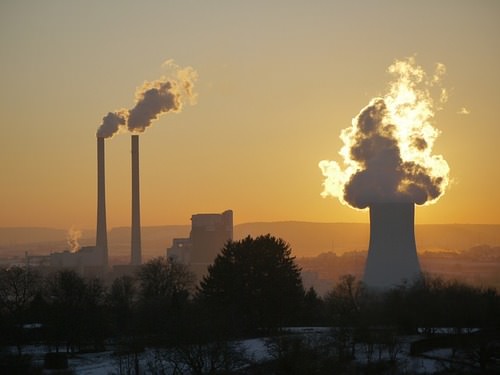
How could releasing this much pollution into the atmosphere not be a poor idea?
::将这么多污染释放到大气中怎么会不是什么坏主意呢?Burning of fossil fuels , such as oil, releases carbon into the atmosphere. This carbon must be cycled - removed from the atmosphere - back into living organisms , or it stays in the atmosphere. Increased carbon in the atmosphere contributes to the on Earth.
::燃烧石油等化石燃料,将碳释放到大气中,这种碳必须循环 -- -- 从大气中去除 -- -- 回到活生物体中,或者留在大气中。大气中增加的碳有助于地球上的碳。Carbon Cycle
::碳循环Runoff , streams, and rivers can gradually dissolve carbon in rocks and carry it to the ocean. The ocean is a major reservoir for stored carbon. It is just one of four major reservoirs. The other three are the atmosphere, the , and organic sediments such as fossil fuels. Fossil fuels , including petroleum and coal, form from the remains of dead organisms. All of these reservoirs of carbon are interconnected by pathways of exchange in the carbon cycle , which is shown in the Figure .
::径流、流流和河流可以逐渐溶解岩石中的碳,并将其带入海洋。海洋是碳储存的主要储油层之一。它只是四个主要储油层之一。其他三个是大气、流水和化石燃料等有机沉积物。化石燃料,包括石油和煤炭,从死生物的残骸中形成。所有这些碳储油层都是通过碳循环中的交换途径相互连接的,如图所示。The Carbon Cycle. Carbon moves from one reservoir to another in the carbon cycle. What role do organisms play in this cycle? Carbon occurs in various forms in different parts of the carbon cycle. Some of the different forms in which carbon appears are described in the Table . Refer to the table as you read how carbon moves between reservoirs of the cycle.
::碳以不同形式出现在碳循环的不同部分中。表 中描述了碳出现的某些不同形式。当您阅读了碳在循环库之间移动的方式时,请参考表格。Forms of Carbon in the Carbon Cycle: Carbon Dioxide, Gas, Calcium Carbonate, Solids Form of Carbon Chemical Formula State Main Reservoir Carbon Dioxide CO 2 Gas Atmosphere Carbonic Acid H 2 CO 3 Liquid Ocean Bicarbonate Ion HCO 3 − Liquid(dissolved ion) Ocean Examples: Glucose , C 6 H 12 O 6 Methane, CH 4 Solid, Gas Biosphere, Organic Sediments ( Fuels) Other Carbon Compounds Examples: Calcium Carbonate, CaCO 3 Calcium Magnesium Carbonate, CaMg(CO 3 ) 2 Solid Sedimentary Rock, Shells KEY: C = Carbon, O = Oxygen, H = Hydrogen
::关键内容:C = 碳,O = 氧,H = 氢Carbon in the Atmosphere
::大气中的碳In the atmosphere, carbon exists primarily as carbon dioxide (CO 2 ). Carbon dioxide enters the atmosphere from several different sources, including those listed below.
::在大气中,碳主要作为二氧化碳(CO2)而存在,二氧化碳从若干不同来源进入大气层,包括以下所列来源。-
Living organisms release carbon dioxide as a byproduct of
.
::活生物体释放二氧化碳,作为......的副产品。 -
Carbon dioxide is given off when dead organisms and other organic materials decompose.
::当死亡生物和其他有机材料分解时,二氧化碳就会释放。 -
Burning organic material, such as fossil fuels, releases carbon dioxide.
::燃烧化石燃料等有机材料会释放二氧化碳。 -
When volcanoes erupt, they give off carbon dioxide that is stored in the mantle.
::当火山爆发时,它们释放出 存放在地壳里的二氧化碳。 -
Carbon dioxide is released when limestone is heated during the production of cement.
::当水泥生产过程中石灰石被加热时,二氧化碳就会释放出来。 -
Ocean
releases dissolved carbon dioxide into the atmosphere when water temperature rises.
::当水温上升时,海洋将溶解的二氧化碳释放到大气中。
A much smaller amount of carbon in the atmosphere is present as methane gas (CH 4 ). Methane is released into the atmosphere when dead organisms and other organic matter decay in the absence of oxygen. It is produced by landfills, the mining of fossil fuels, and some types of .
::大气中以甲烷气(CH4)形式存在的碳含量要小得多。 当死亡生物和其他有机物在没有氧气的情况下腐烂时,甲烷就会释放到大气中。 甲烷通过填埋、化石燃料的开采和某些种类的甲烷产生。There are also several different ways that carbon leaves the atmosphere. Carbon dioxide is removed from the atmosphere when plants and other autotrophs take in carbon dioxide to make organic compounds during or . Carbon dioxide is also removed when ocean water cools and dissolves more carbon dioxide from the air.
::碳还以几种不同的方式离开大气层。当植物和其他自养养分吸收二氧化碳,在(......)期间或(......)期间制造有机化合物时,二氧化碳被从大气中清除。 当海水冷却,从空气中溶解更多的二氧化碳时,二氧化碳也会被清除。Because of human activities, there is more carbon dioxide in the atmosphere today than in the past hundreds of thousands of years. Burning fossil fuels and producing concrete has released great quantities of carbon dioxide into the atmosphere. Cutting forests and clearing land has also increased carbon dioxide into the atmosphere because these activities reduce the number of autotrophic organisms that use up carbon dioxide in photosynthesis. In addition, clearing often involves burning, which releases carbon dioxide that was previously stored in autotrophs.
::由于人类的活动,今天大气中的二氧化碳比过去数十万年要多。 燃烧化石燃料和生产混凝土将大量二氧化碳释放到大气中。 砍伐森林和清理土地也增加了二氧化碳进入大气,因为这些活动减少了光合作用二氧化碳的自养生物的数量。 此外,清除经常涉及燃烧,释放以前储存在自养土中的二氧化碳。Carbon in Ocean Water
::海洋水中的碳碳Most carbon enters the ocean when carbon dioxide in the atmosphere dissolves in ocean water. When carbon dioxide dissolves in water (H 2 O), it forms an acid called carbonic acid (H 2 CO 3 ). The reaction is given by the equation:
::当大气中的二氧化碳溶解于海水中时,大多数碳进入海洋。当二氧化碳溶解于水(H2O)时,它形成一种酸,称为碳酸(H2CO3)。CO 2 + H 2 O ↔ H 2 CO 3 .
::CO2 + H2O H2CO3。The double-headed arrow indicates that the reaction can occur in either direction, depending on the conditions and the amount of carbon dioxide present. For example, the reaction occurs more readily in the left-to-right direction in cold water. As a result, near the poles, where ocean water is cooler, more carbon dioxide is dissolved and there is more carbonic acid in the water. Although carbonic acid is a weak acid, it is an important regulator of the acid-base (pH) balance of ocean water.
::双头箭头表明,反应可以朝着任一方向发生,取决于现有二氧化碳的条件和数量。例如,反应更容易在冷水的左对右方向发生。结果,在海水更冷却的极附近,更多的二氧化碳溶解,水中更多的碳酸。虽然碳酸是一种微酸,但它是海水酸基平衡的重要调节者。Carbonic acid, in turn, readily separates into hydrogen ions (H + ) and bicarbonate ions (HCO 3 − ). This occurs in the following reaction:
::碳酸反过来容易分离成氢离子(H+)和碳酸离子(HCO3-)。H 2 CO 3 ↔ H + + HCO 3 − .
::H2CO3 + H+ + HCO3 - 。Due to these two reactions, most dissolved carbon dioxide in the ocean is in the form of bicarbonate ions. Another source of bicarbonate ions in ocean water is runoff. Flowing water erodes rocks containing carbon compounds such as calcium carbonate. This forms bicarbonate ions, which the runoff carries to streams, rivers, and eventually the ocean. Many of the bicarbonate ions in ocean water are moved by ocean currents into the deep ocean. Carbon can be held in this deep ocean reservoir as bicarbonate ions for thousands of years or more.
::由于这两种反应,海洋中大部分溶解的二氧化碳以碳酸盐离子的形式出现。海洋中碳酸盐离子的另一个来源是径流。水流侵蚀碳化合物的岩石,如碳酸钙。这形成了碳酸盐离子,径流将碳酸盐离子输送到溪流、河流,并最终流入海洋。海水中的许多碳酸盐离子被洋流移动到深海中。碳可以作为碳酸盐离子在深海中储存数千年或更多年。Carbon in the Biosphere
::生物圈中的碳Bicarbonate ions near the surface of the ocean may be taken up by photosynthetic and that live near the surface. These and other autotrophic organisms use bicarbonate ions or other forms of carbon to synthesize organic compounds. Carbon is essential for life because it is the main ingredient of every type of organic compound. Organic compounds make up the and tissues of all organisms and keep organisms alive and functioning. Carbon enters all , both and , through autotrophs such as plants or algae. Autotrophs use carbon dioxide from the air, or bicarbonate ions from the water, to make organic compounds such as glucose. Heterotrophs consume the organic molecules and pass the carbon through and webs.
::海洋表面附近的生物碳离子可能被光合体吸收,并生活在表面附近。这些和其他自养生物使用碳离子或其他形式的碳合成有机化合物。碳对生命至关重要,因为它是每一种有机化合物的主要成分。有机化合物构成所有有机体和组织,并保持生物体的活力和机能。碳通过植物或藻类等自养养分进入所有生物。自发营养利用空气中的二氧化碳或水中的碳离子,制造诸如葡萄糖等有机化合物。血化营养消耗有机分子,通过网和网传递碳。How does carbon cycle back to the atmosphere or ocean? All organisms release carbon dioxide as a byproduct of cellular respiration. Recall from the Cellular Respiration chapter that cellular respiration is the process by which cells oxidize glucose and produce carbon dioxide, water, and energy . Decomposers also release carbon dioxide when they break down dead organisms and other organic waste.
::碳循环如何回到大气层或海洋?所有生物都释放二氧化碳作为细胞呼吸的副产品。从细胞呼吸章节中回顾,细胞呼吸是细胞氧化甘蔗糖和产生二氧化碳、水和能源的过程。 分解器在分裂死亡生物和其他有机废物时也会释放二氧化碳。In a balanced ecosystem, the amount of carbon used in photosynthesis and passed through the ecosystem is about the same as the amount given off in respiration and decomposition. This cycling of carbon between the atmosphere and organisms forms an organic pathway in the carbon cycle. Carbon can cycle quickly through this organic pathway, especially in aquatic ecosystems. In fact, during a given period of time, much more carbon is recycled through the organic pathway than through the geological pathway you will read about next.
::在平衡的生态系统中,光合作用和通过生态系统的碳使用量与呼吸和分解的碳使用量大致相同。 大气和有机体之间碳循环形成碳循环的有机途径。 碳可以通过有机途径快速循环,特别是在水生生态系统中。 事实上,在特定时期内,通过有机途径回收的碳比通过地质途径回收的碳要多得多。Carbon in Rocks and Sediments
::岩石和沉积物中的碳The geological pathway of the carbon cycle takes much longer than the organic pathway described above. In fact, it usually takes millions of years for carbon to cycle through the geological pathway. It involves processes such as rock formation, subduction, and volcanism.
::碳循环的地质路径比上述有机路径要长得多。 事实上,碳通过地质路径循环通常需要数百万年的时间。 它涉及岩层形成、稀释和火山等过程。As stated previously, most carbon in ocean water is in the form of bicarbonate ions. Bicarbonate ions may bind with other ions, such as calcium ions (Ca + ) or magnesium ions (Mg + ), and form insoluble compounds. Because the compounds are insoluble, they precipitate out of water and gradually form sedimentary rock, such as limestone (calcium carbonate, CaCO 3 ) or dolomite [calcium magnesium carbonate CaMg(CO 3 ) 2 .
::如前所述,海水中的大多数碳以碳酸盐离子的形式出现,碳酸盐离子可能与其他离子结合,如钙离子(Ca+)或镁离子(Mg+),并形成溶解性化合物,由于化合物是溶解的,它们从水中产生,逐渐形成沉积岩,如石灰岩(碳酸钙、CaCO3)或多洛米[碳酸钙镁(CO3)2]。Dead organisms also settle to the bottom of the ocean. Many of them have shells containing calcium carbonate. Over millions of years, the pressure of additional layers of sediments gradually changes their calcium carbonate and other remaining organic compounds to carbon-containing sedimentary rock.
::死生物也定居在海底,其中许多是含有碳酸钙的贝壳。 数百万年来,更多层沉积物的压力逐渐将碳酸钙和其他剩余有机化合物转化为含碳的沉积岩。During some periods in Earth’s history, very rich organic sediments were deposited. These deposits formed pockets of hydrocarbons. Hydrocarbons are organic compounds that contain only carbon and hydrogen. The hydrocarbons found in sediments are fossil fuels such as natural gas. The hydrocarbon methane is the chief component of natural gas.
::在地球历史上的一段时间里,沉积着非常丰富的有机沉淀物,这些沉淀物形成了碳氢化合物。碳氢化合物是仅含有碳和氢的有机化合物。在沉淀物中发现的碳氢化合物是天然气等化石燃料。碳氢化合物甲烷是天然气的主要成分。Carbon-containing rocks and sediments on the ocean floor gradually move toward the edges of the ocean due to a process called seafloor spreading. The rocks eventually reach cracks in the crust, where they are pulled down into the mantle. This process, called subduction , occurs at subduction zones. In the mantle, the rocks melt and their carbon is stored. When volcanoes erupt, they return some of the stored carbon in the mantle to the atmosphere in the form of carbon dioxide, a process known as volcanism . This completes the geological pathway of the carbon cycle.
::洋底含碳岩石和沉淀物由于被称为海底扩张的过程而逐渐向海洋边缘移动。岩石最终到达地壳裂缝,被拉入地壳。这个过程被称为潜入,在潜入区发生。在地壳中,岩石熔化和碳储存。火山爆发时,岩浆以二氧化碳的形式将一些储存在地壳中的碳送回大气中,这是一种被称为火山的过程。这完成了碳循环的地质路径。Summary
::摘要-
The organic pathway of the carbon cycle moves carbon from the atmosphere, through producers and other organisms in ecosystems, and back to the atmosphere.
::碳循环的有机路径将碳从大气中转移,通过生态系统中的生产者和其他生物体,然后返回大气层。 -
The geological pathway moves carbon from the atmosphere, through the ocean to rocks and the mantle, and back to the atmosphere. This pathway usually takes much longer than the organic pathway.
::地质路径将碳从大气、海洋到岩石和地壳,再回到大气层。 这条路径通常比有机路径花费的时间要长得多。 -
Carbon is often stored in the ocean and or in the mantle.
::碳通常储存在海洋或地皮中。
Review
::回顾-
State three ways that carbon dioxide enters Earth’s atmosphere.
::说明二氧化碳以三种方式进入地球大气层。 -
Describe all the ways that a single tree might be involved in the carbon cycle.
::描述一棵树可能参与碳循环的所有方式。 -
Compare and contrast organic and geological pathways in the carbon cycle.
::比较和对比碳循环中的有机和地质路径。
-
Living organisms release carbon dioxide as a byproduct of
.